Septic systems fail in pieces long before they fail as a whole — a crumbled outlet baffle, a cracked distribution box, a crushed line, a pump that quit. Each of these has a specific fix, and catching the right one is the difference between a targeted repair and a five-figure replacement you didn't need.
We repair the components that actually fail: baffles and tees, effluent filters, distribution boxes, pumps and floats, damaged pipe sections, and failing risers and lids. We diagnose first — opening the tank, tracing the problem to its source — then fix exactly that, and verify the system works before we close up.
This is the right call for backups that keep recurring after pumping, wet spots that won't dry, alarms on systems with pumps, or any inspection finding that flagged a component as failing. A proper repair now is what keeps a component failure from becoming a system replacement.
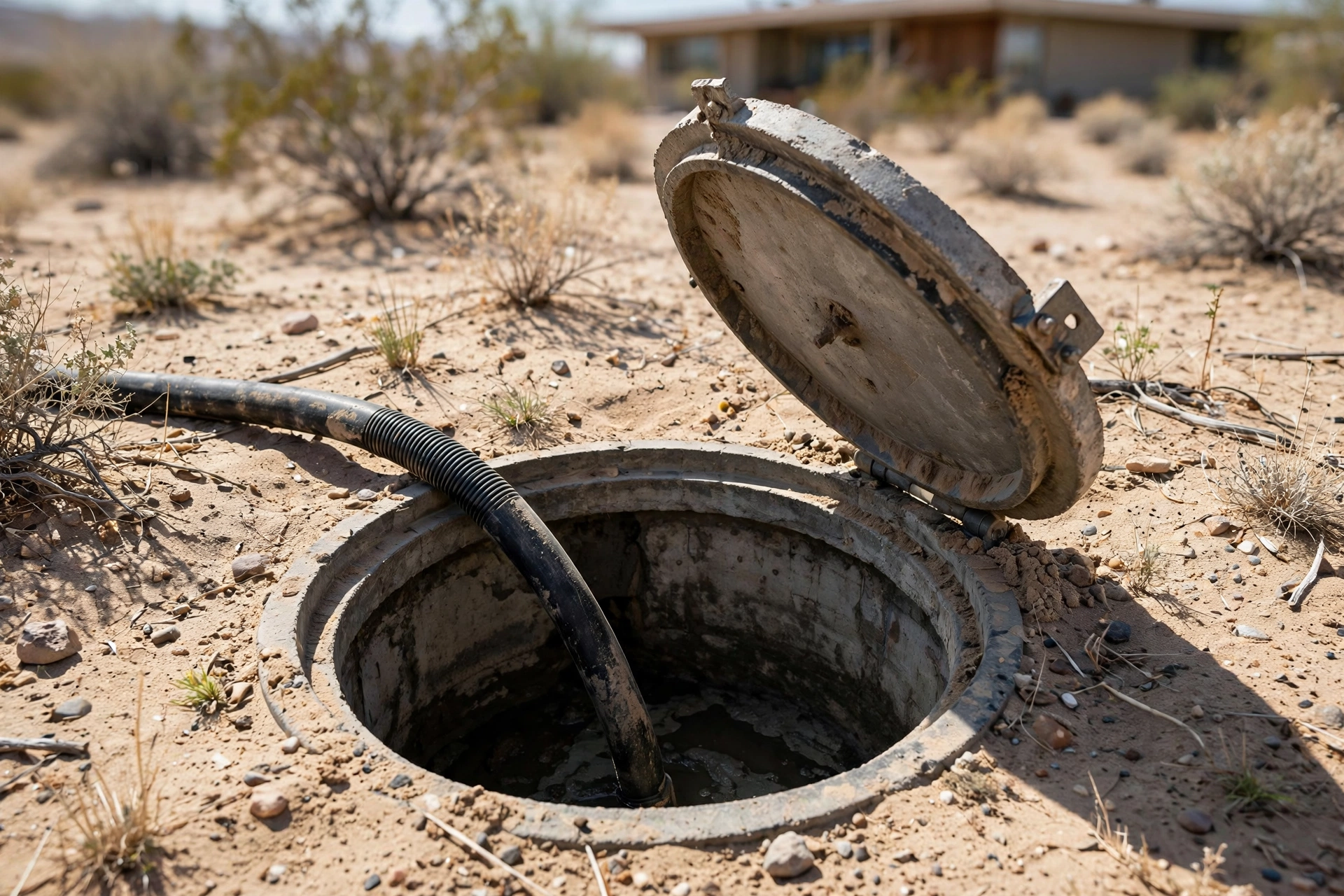
Signs your septic system needs repair
- Backups that return even after the tank was just pumped
- Sewage odors that pumping didn't resolve
- Alarm sounding on a system with a pump
- One section of the drain field soggy while the rest is dry
- Toilets and drains gurgling in a pattern tied to water use
- Visible damage to risers, lids, or the area over the tank
How we handle a repair
1 Diagnose the actual failure
We trace symptoms to the source instead of treating them. A backup can be a full tank, a failed baffle letting solids through, a crushed line, or a saturated field — each needs a different fix, and guessing wrong wastes your money.
2 Fix the failed component
Baffles rebuilt, distribution boxes re-leveled or replaced, crushed sections of line excavated and replaced, pumps and floats swapped. We repair to the system's original design — no shortcuts that create the next failure.
3 Verify the whole system
After the repair, we run water through the system and confirm it behaves: tank levels correct, distribution even, field accepting water. A repair isn't done until the system proves it works.
4 Tell you what to watch
Every repair comes with straight talk about the system's overall condition — what else is aging, what's fine, and what would change our recommendation from repair to replacement down the road.
What breaks on desert systems
The failure patterns in the Coachella Valley are distinct. Concrete tanks from the 1960s–70s suffer baffle deterioration from decades of hydrogen sulfide gas — the baffle crumbles, solids escape to the field, and the field starts failing from a problem that began in the tank. Hard water mineral crust builds on effluent filters until flow chokes; we see filters that look ancient at two years old. Distribution boxes settle unevenly in sandy desert soil, sending all the effluent down one line while the others sit dry — one soggy strip of yard and three useless ones. And root intrusion is a desert constant: date palms and ficus send roots astonishing distances for drain field moisture, crushing or invading lines. Most of what we repair here is one of these four — and most of it is fixable without replacing the system, if it's caught before the field itself is damaged.
Need septic repair in Palm Springs?
No forms, no waiting — one call connects you with a local technician.
(555) 123-4567 📞 Call Now