Desert Soil Septic Care in Palm Springs, CA
Desert soil looks simple and behaves complicated. Loose sand that drains beautifully can hide a caliche shelf that drains not at all. Hard water crusts components that would last years in softer regions. And 110-degree summers change how a system lives and breathes. Standard septic advice written for other climates misses all of this — desert systems need desert knowledge.
This service is our desert-specific care: soil and percolation assessment that finds caliche and hardpan before they cause failures, hard-water component care (filter and baffle descaling on a desert schedule), heat-season system checkups, and root management for the palms and ficus that hunt drain field moisture. It's the maintenance layer that generic septic service doesn't provide.
This is the right call if your system has 'mystery' problems nobody's explained, if you're on a lot with known caliche, if your filters crust over fast, or if you want a system evaluation from people who work in desert soil every day.
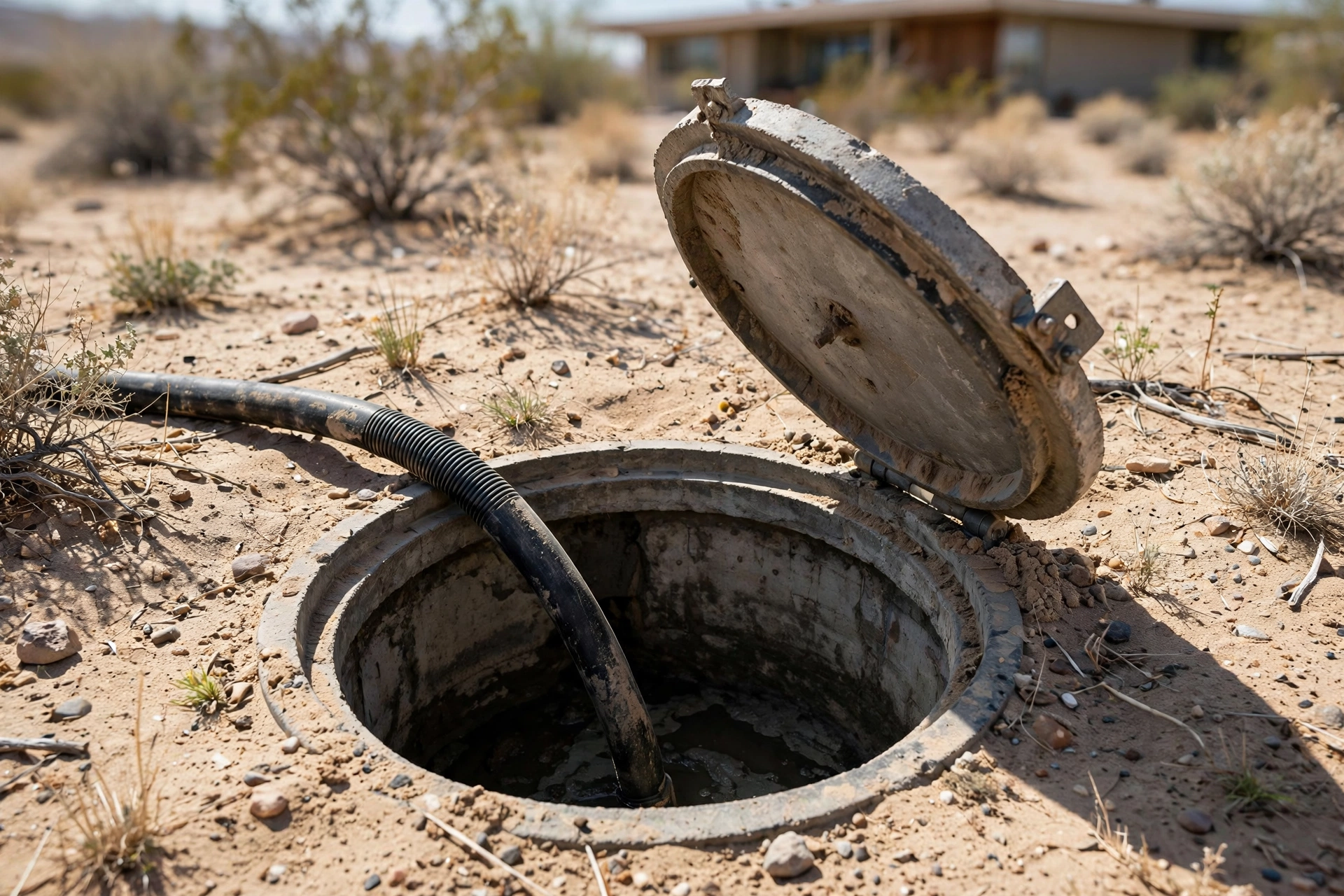
Signs of desert-specific septic stress
- Effluent filters crusting over much faster than expected
- Wet areas that appear and vanish with the seasons
- Drain field problems on soil that 'should' percolate fine
- Palm or ficus trees growing near the tank or field
- System struggles that worsen every summer
- A previous installer or pumper who couldn't explain the problem
How desert-soil care works
1 Read your ground
We assess what's actually under your system — soil profile, depth to caliche or hardpan, percolation behavior. Much of the Coachella Valley has layered soils where the top two feet lie about the next ten. Knowing the layers explains problems that baffle everyone else.
2 Address the hard water
We descale and service the components mineral buildup attacks: effluent filters, baffles, distribution boxes. Then we set a cleaning interval matched to your water — not a national average that assumes soft water.
3 Manage roots and heat
We map root intrusion risk from nearby palms and ficus, clear what's invading, and set barriers where warranted. Heat-season checkups catch the stress that 110°F+ summers put on tank biology and field surfaces before fall reveals the damage.
4 Build your desert schedule
You get a care calendar built for this climate — pumping, filter service, and checkups timed to desert realities. It's the difference between maintaining a system and just reacting to it.
What makes desert soil different
Three things define septic life in the Coachella Valley. First, caliche: calcium-carbonate-cemented layers that form in desert soils and behave like concrete to percolating water. A drain field trenched to standard depth can sit right on a caliche shelf, sending effluent sideways into places it was never meant to go — including, in bad cases, toward foundations or neighboring lots. Second, hard water: Palm Springs water is mineral-heavy, and those minerals precipitate onto every surface effluent touches — filters, baffles, distribution boxes — narrowing passages year by year. Third, heat and roots: summer temperatures over 110°F bake field surfaces and stress tank biology, while every palm and ficus within reach sends roots toward the one reliable moisture source in the desert — your drain field. These aren't exotic problems here; they're the normal operating environment. Systems designed and maintained with them in mind last. Systems maintained by generic rules don't.
Need desert soil & septic care in Palm Springs?
No forms, no waiting — one call connects you with a local technician.
(555) 123-4567 📞 Call Now